
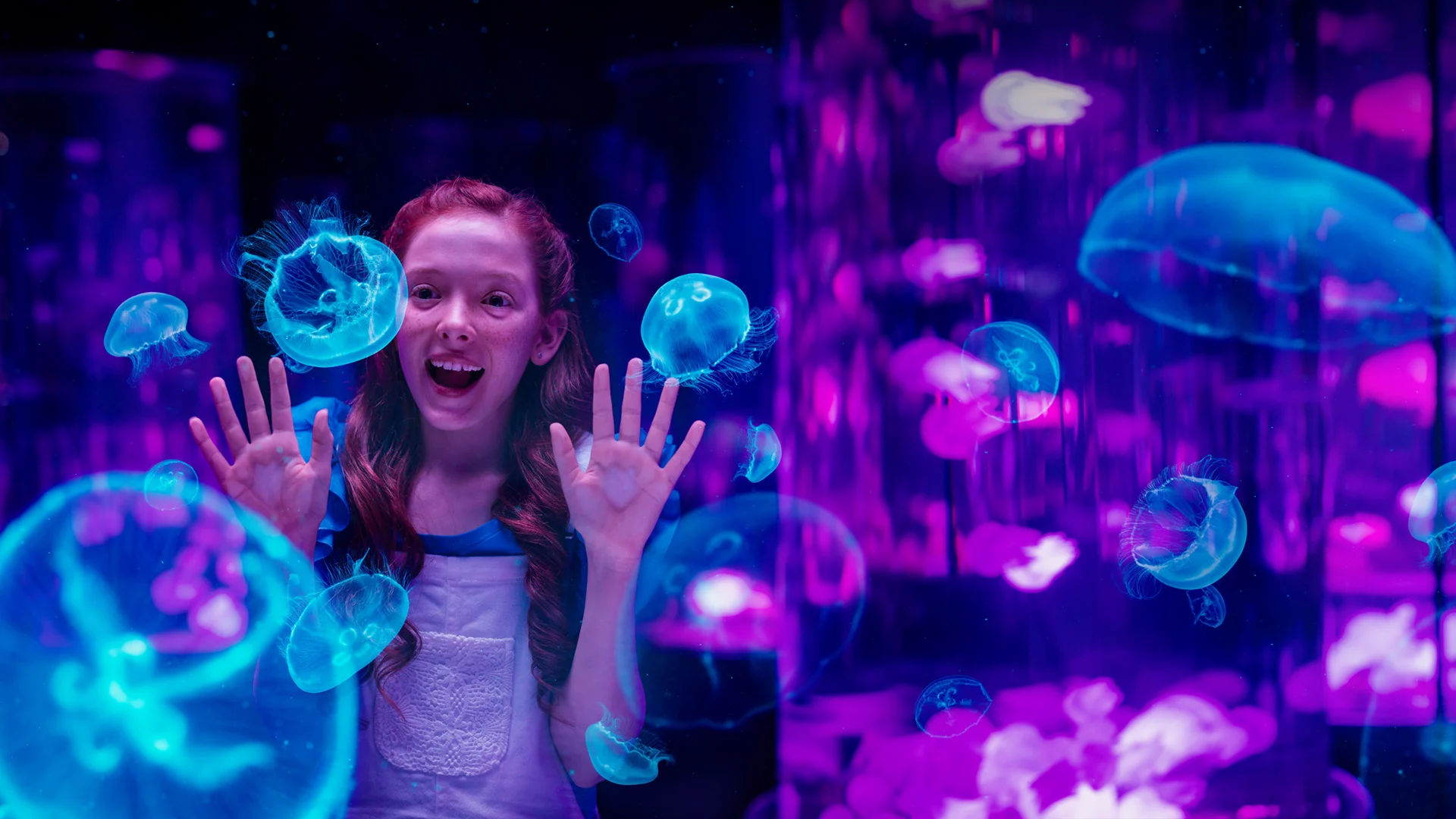
Sea Jellies Illuminated
Experience Sea Jellies like never before with an illuminated backdrop full of colour and life. Plus, learn all about these amazing creatures in the first-of-its-kind operating research laboratory from Griffith University.
Fun Facts about Sea Jellies!

Blue Blubbers
Scientific name: Catostylus mosaicus Distribution: Common in the coastal waters of eastern and southern Australia.
Catostylus mosaicus is recognised for its robust, dome-shaped bell and thick, frilly oral arms that radiate from the bell’s underside. Typically displaying shades of blue, white, or brown, the species can form large blooms in estuaries and bays during warm seasons. It has a moderate sting and feeds primarily on plankton, using its mucus-coated oral arms to trap food. Its striking colouration and frequent coastal aggregations make it one of Australia’s most familiar jellyfish.
Crystal Jellies
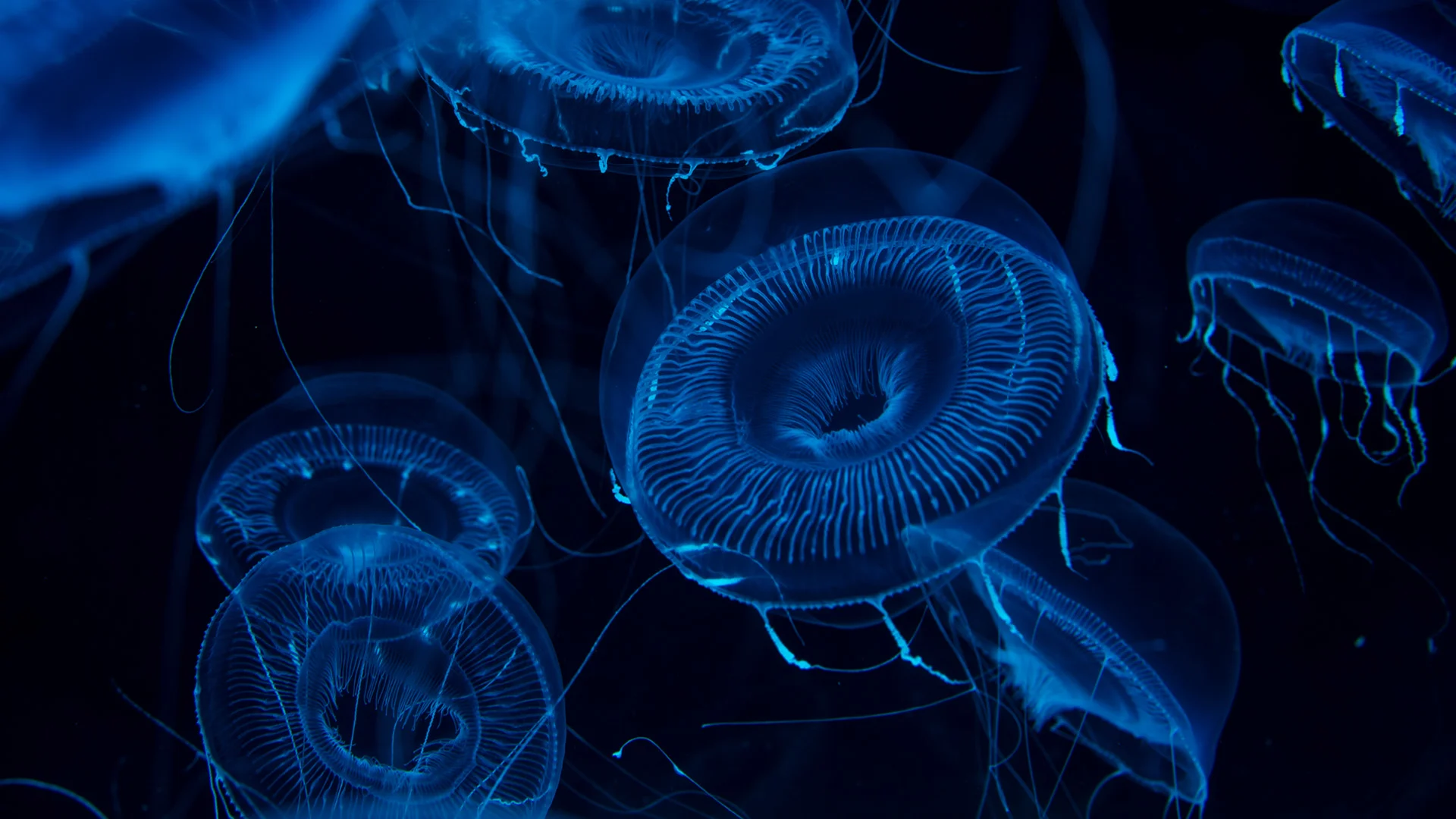
Scientific name: Aldersladia magnificus Distribution: Tropical to Subtropical Australian Waters
The Crystal jelly is the largest hydrozoan sea jelly and produces a bright Green light (bioluminescence) around the edge of its bell. Bioluminescence is produced by a protein, called the 'Green Fluorescent Protein' or 'GFP'.

Moon Jellies
Scientific name: Aurelia coerulea Distribution: Native to the western Pacific but now found widely in temperate and subtropical coastal waters due to human-mediated spread.
Aurelia coerulea is a moon jelly distinguished by its translucent, saucer-shaped bell and the characteristic four horseshoe-shaped gonads visible through the bell. It typically reaches moderate sizes, with a soft, gelatinous texture and gently pulsating locomotion. This species tolerates a wide range of environmental conditions, enabling it to thrive in harbours, marinas, and other human-altered habitats. Its mild sting and opportunistic feeding on zooplankton make it an adaptable and sometimes invasive jellyfish in coastal ecosystems.
Blue Blubbers
Scientific name: Catostylus mosaicus Distribution: Common in the coastal waters of eastern and southern Australia.
Catostylus mosaicus is recognised for its robust, dome-shaped bell and thick, frilly oral arms that radiate from the bell’s underside. Typically displaying shades of blue, white, or brown, the species can form large blooms in estuaries and bays during warm seasons. It has a moderate sting and feeds primarily on plankton, using its mucus-coated oral arms to trap food. Its striking colouration and frequent coastal aggregations make it one of Australia’s most familiar jellyfish.
Crystal Jellies
Scientific name: Aldersladia magnificus Distribution: Tropical to Subtropical Australian Waters
The Crystal jelly is the largest hydrozoan sea jelly and produces a bright Green light (bioluminescence) around the edge of its bell. Bioluminescence is produced by a protein, called the 'Green Fluorescent Protein' or 'GFP'.
Moon Jellies
Scientific name: Aurelia coerulea Distribution: Native to the western Pacific but now found widely in temperate and subtropical coastal waters due to human-mediated spread.
Aurelia coerulea is a moon jelly distinguished by its translucent, saucer-shaped bell and the characteristic four horseshoe-shaped gonads visible through the bell. It typically reaches moderate sizes, with a soft, gelatinous texture and gently pulsating locomotion. This species tolerates a wide range of environmental conditions, enabling it to thrive in harbours, marinas, and other human-altered habitats. Its mild sting and opportunistic feeding on zooplankton make it an adaptable and sometimes invasive jellyfish in coastal ecosystems.
Learn More about Sea Jellies
Sea Jellies Educational Talk
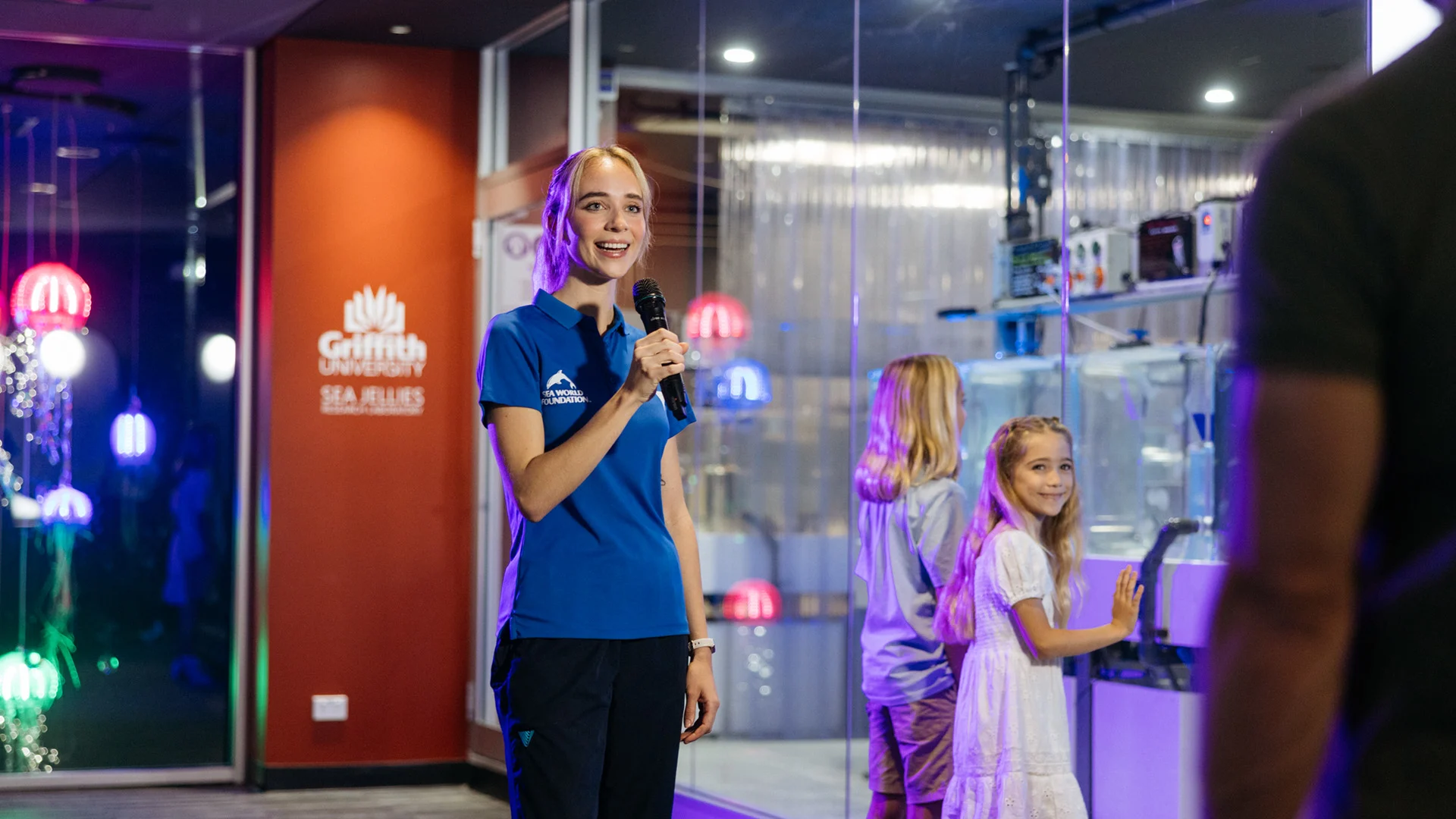
Want to learn more about these cryptic and fascinating animals that are found all over the globe and don’t even have a brain? Visit Sea Jellies Illuminated, to hear all about the role Sea Jellies play in the ocean.
Want to learn more about these cryptic and fascinating animals that are found all over the globe and don’t even have a brain? Visit Sea Jellies Illuminated, to hear all about the role Sea Jellies play in the ocean.
Partners
Griffith University Research Laboratory
The Griffith Sea Jellies Research Laboratory is a state-of-the-art facility, which places Griffith University at the forefront of jellyfish research. This exhibit provides a glimpse into the ongoing research in the fascinating world of sea jellies.

Surf Life Saving Queensland
Sea World’s partnership with Surf Life Saving Queensland plays an important role in educating communities about aquatic safety and sea jelly stings with the goal of achieving zero preventable deaths in Queensland's public waters.
Griffith University Research Laboratory
The Griffith Sea Jellies Research Laboratory is a state-of-the-art facility, which places Griffith University at the forefront of jellyfish research. This exhibit provides a glimpse into the ongoing research in the fascinating world of sea jellies.
Surf Life Saving Queensland
Sea World’s partnership with Surf Life Saving Queensland plays an important role in educating communities about aquatic safety and sea jelly stings with the goal of achieving zero preventable deaths in Queensland's public waters.
Animals After Dark
Polar Bear Shores
Learn More
Penguin Point
Learn More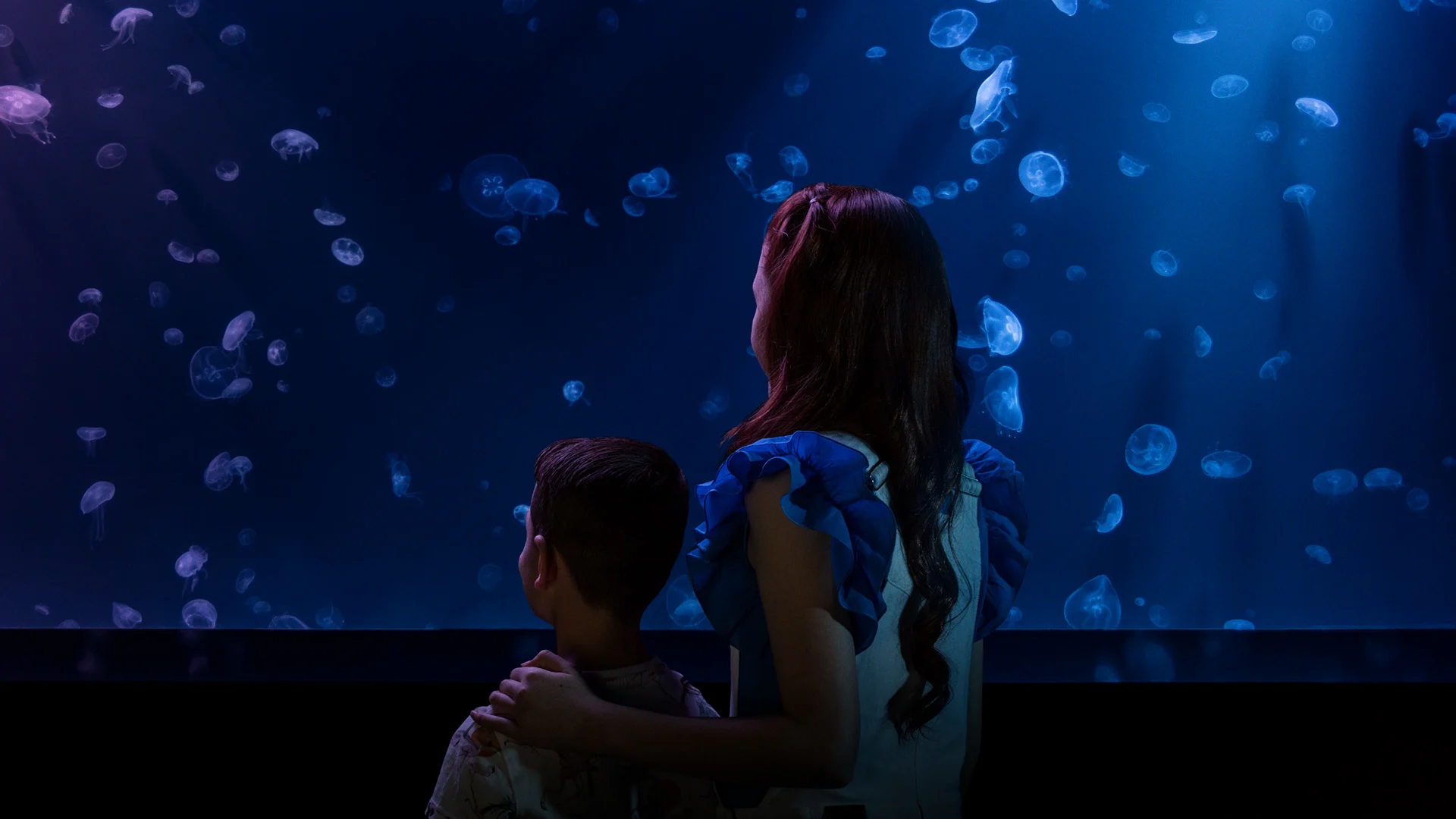
Sea Jellies Illuminated
Learn More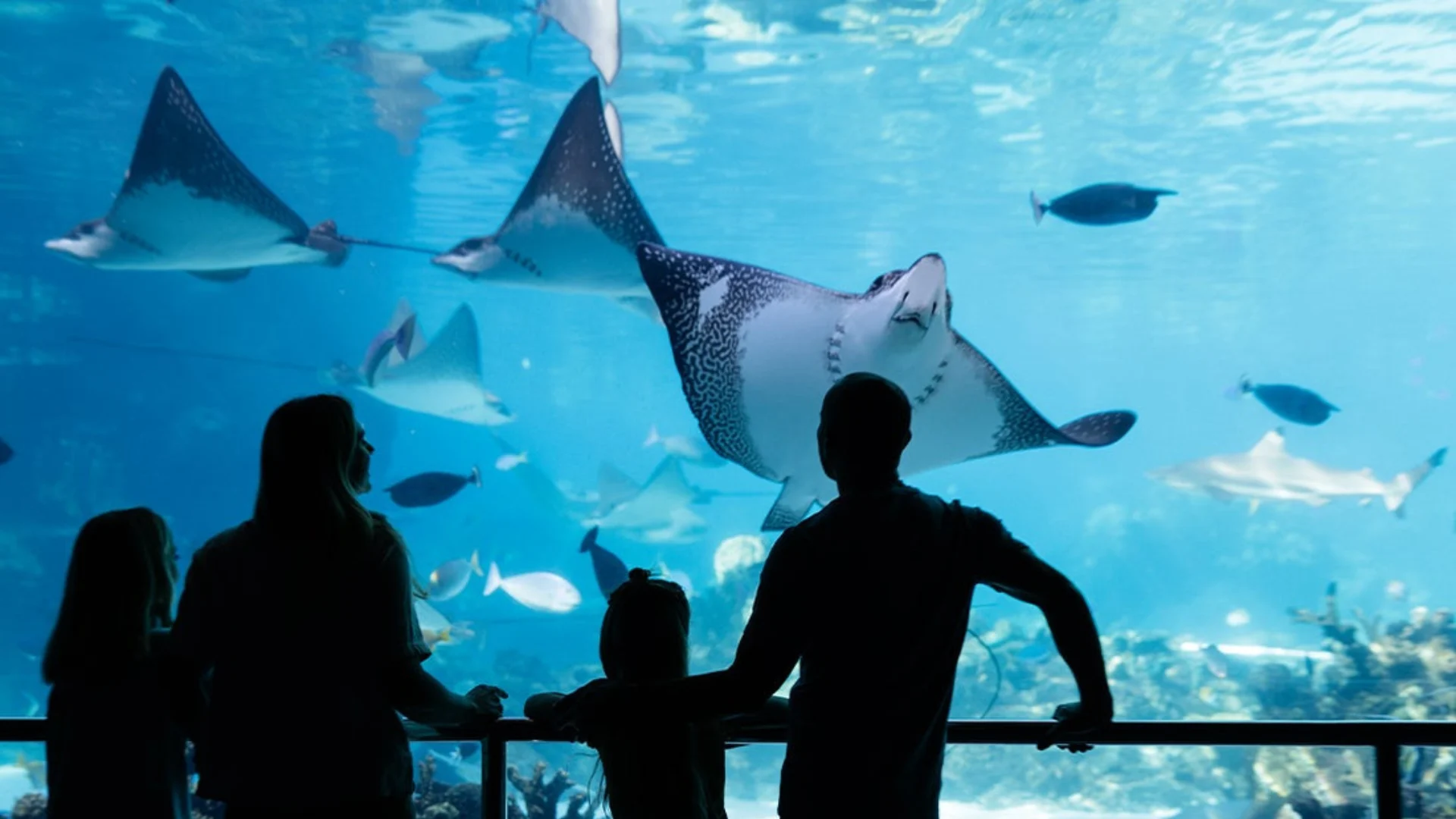
Shark Bay
Learn MoreExplore More of Carnivale
Carnivale Precincts
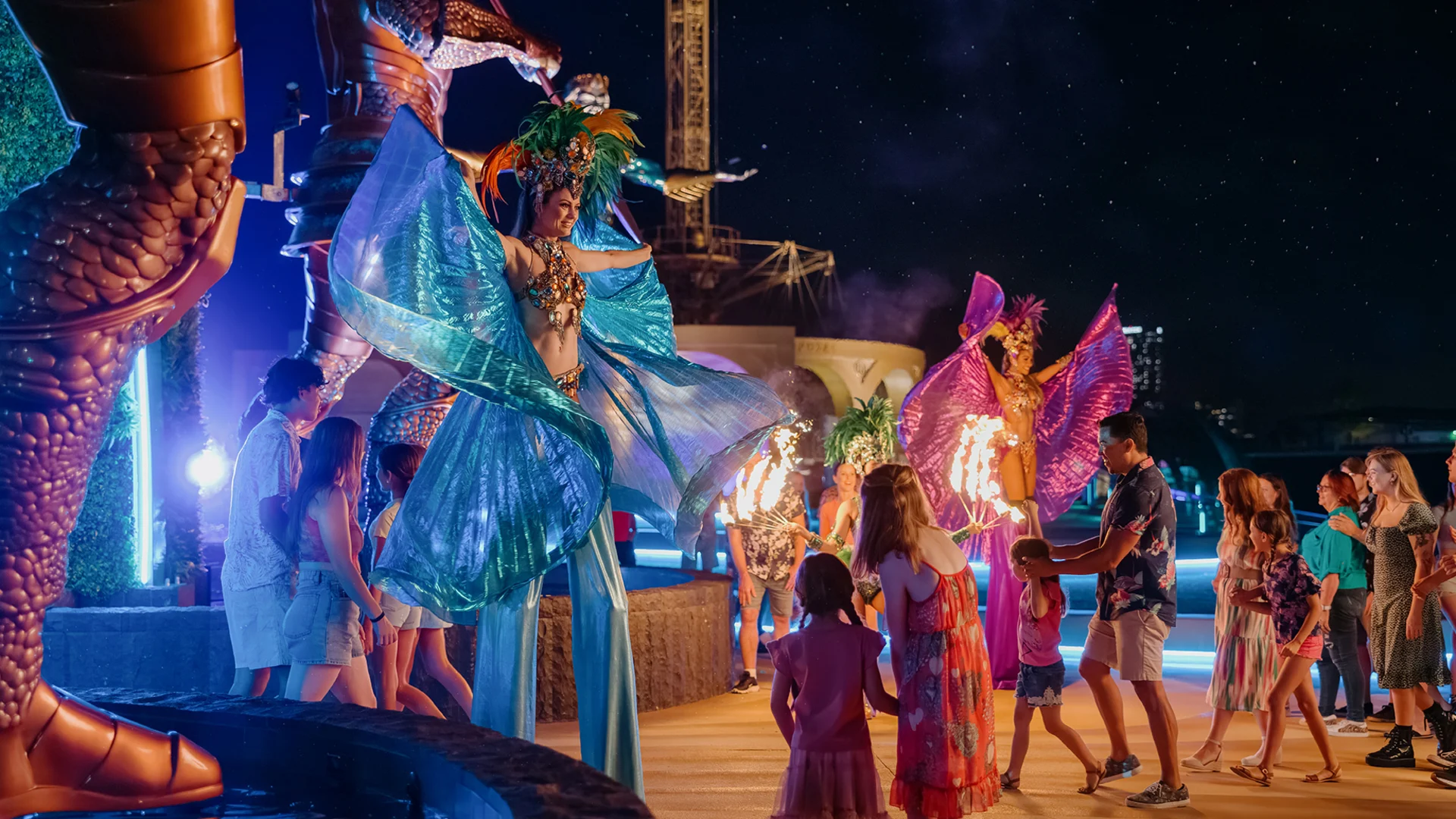
Journey through vibrant precincts inspired by Mexico, Rio, New Orleans and Africa, each bursting with its own colours, sounds and flavours. From sizzling street performances and live music to mouth-watering bites and dazzling energy, every world celebrates in its own unforgettable way.

The New Atlantis
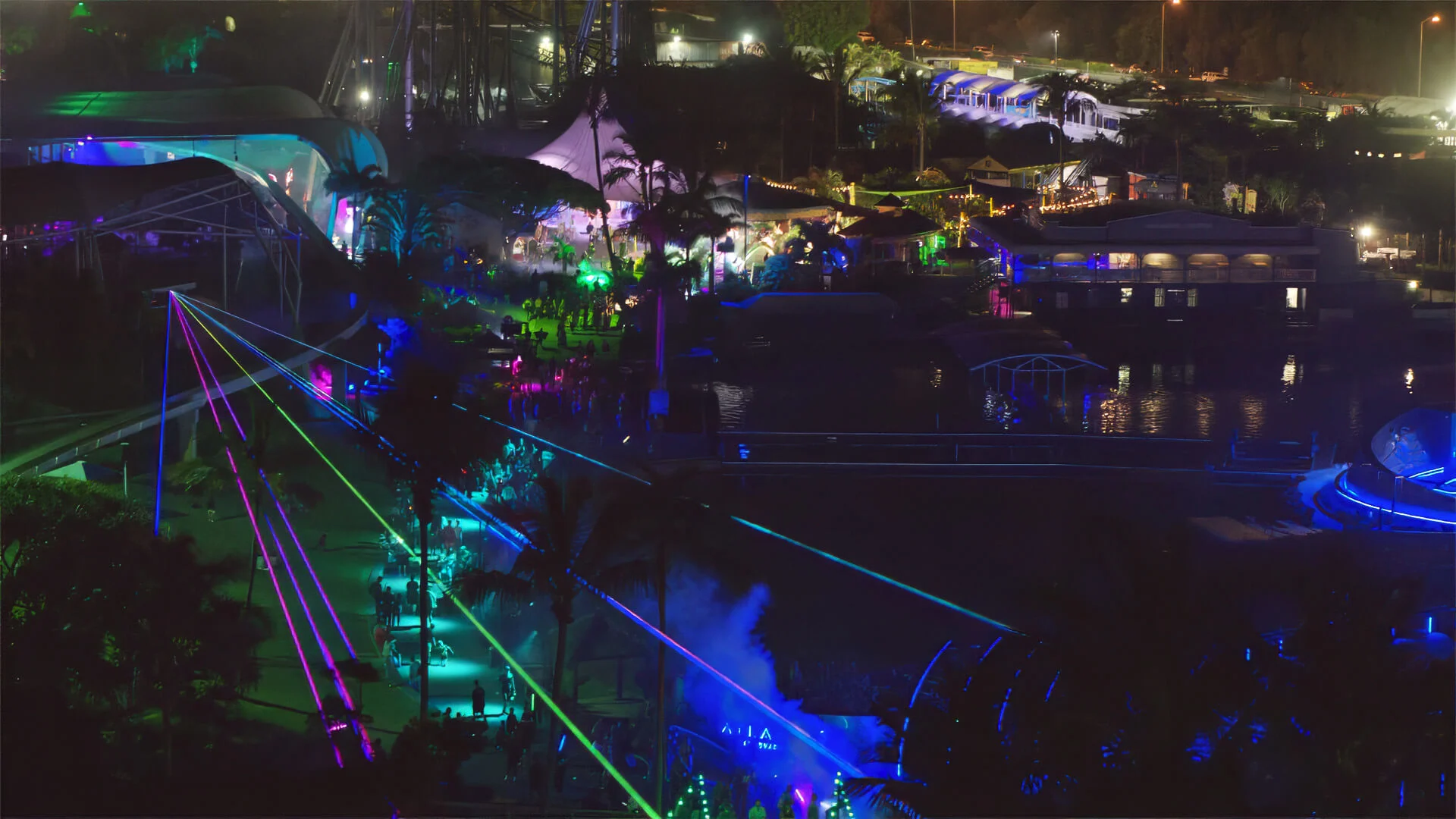
Experience the myths and mysteries of The New Atlantis at night. Brave colossal currents, conquer a mighty creature and rule from the skies in this fully immersive precinct featuring the Leviathan and Vortex.
Nickelodeon Land
Experience colorful adventures at Nickelodeon Land after dark! Ride your favourites like Bikini Bottom Cross Town Express and Boots' Banana Boogie, and meet beloved Nickelodeon stars like SpongeBob and Patrick!
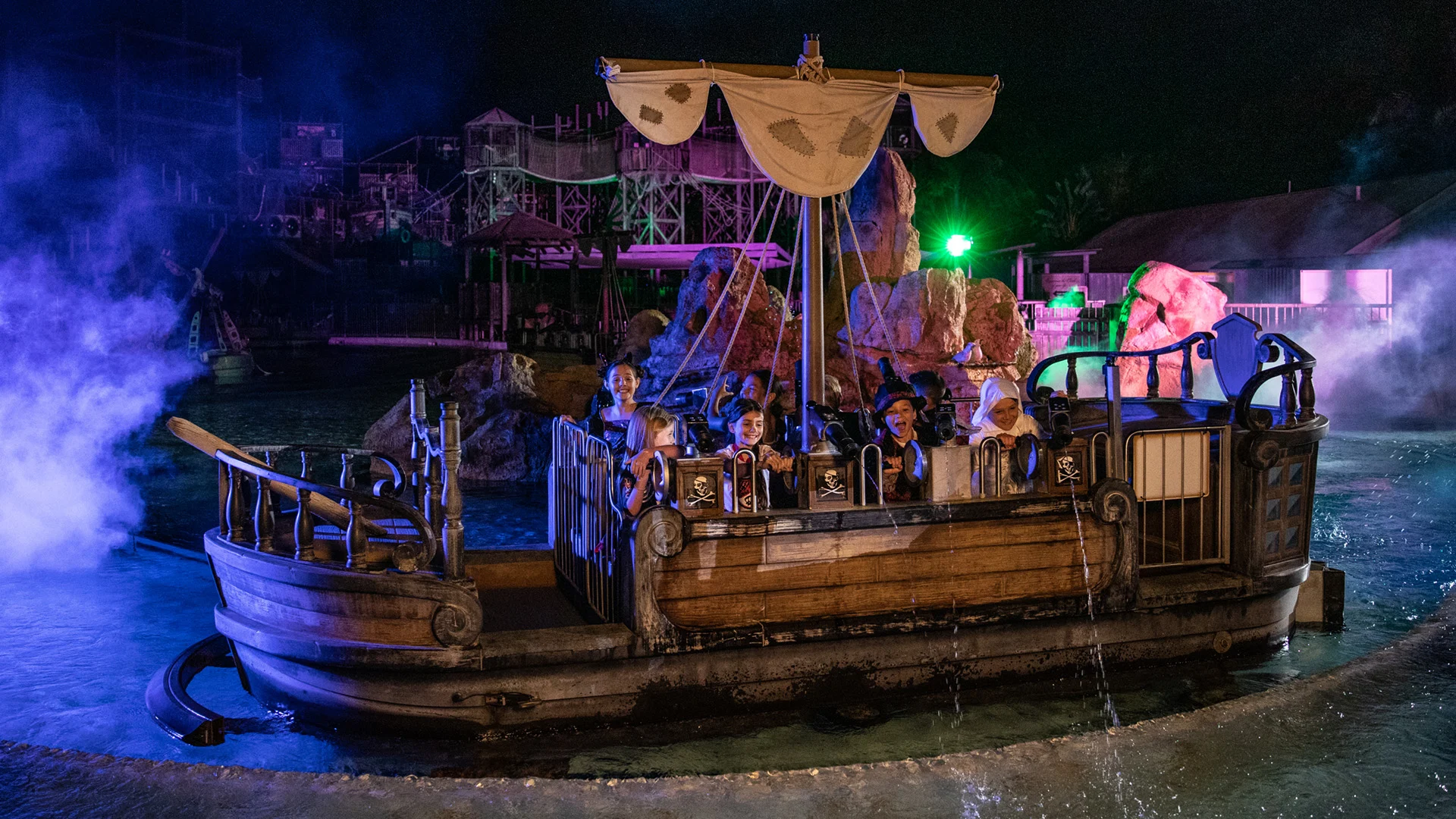
Castaway Bay
This interactive adventure playground has something for everyone and will keep you entertained for hours whether you’re young or young at heart.
Get Park Ready With The Theme Parks App
View interactive maps, upcoming showtimes and check ride wait times during your visit to make the most of your night!